Travel insurance is important. It provides protection and coverage for unexpected events that can happen on holiday.
Why do I need travel insurance?
Travel insurance can cover a range of scenarios, such as:
- Medical emergencies and repatriation
- Lost or stolen baggage
- Trip cancellations or interruptions
- Natural disasters
You must purchase cover that is appropriate for your travel plans.
What if I choose not to buy insurance?
Travelling without the right cover can be very expensive if things do go wrong while you are abroad. You could face a big bill if you:
- Buy a basic policy that does not provide enough medical coverage or medical evacuation, and you have an unexpected health issue on holiday.
- Fail to disclose all your medical conditions while buying travel insurance or update on changes before you go away.
- Buy policy that does not cover your planned holiday activities including things like skiing, water sports or quad biking.
- Buy a policy that doesn’t cover cancellations or delays.
- Don’t have a policy that covers your whole trip for regions you plan to travel to, including countries you are transiting through.
We can provide consular support like signposting to local lawyers or medical providers, but we will not cover your costs.
Where do I start when buying travel insurance?
These small actions could save you a lot of money:
- Visit our Foreign Travel Insurance page for more information on what your travel insurance should cover and common exclusions to check for.
- Check Travel Advice and sign up to alerts for your destination(s). If you travel to a destination where we advise against all but essential travel or all travel, your insurance may be invalidated.
- Visit the Association for British Insurers for advice on travel insurance and choosing the right travel insurance policy.
- See the MoneyHelper travel insurance directory for further information.
- For help finding specialist cover visit the British Insurance Brokers’ Association.
No insurance
A teenager without travel insurance was travelling on holiday with family, when they were hospitalised after a mid-air collision with a paraglider. They sustained serious injuries requiring urgent treatment and medical repatriation. The total cost of care reached £45,000.
Inadequate insurance cover
A British tourist involved in a motorbike accident sustained multiple serious injuries, including a shattered elbow and several broken bones. The insurance provider refused to cover the £23,000 medical bill after it emerged the individual was riding a 125cc motorbike, while the insurance policy only covered vehicles up to 50cc.
Undeclared medical condition
A British national was hospitalised and admitted to intensive care following a stroke while abroad. The insurance provider refused to cover the medical costs after it emerged the individual had not declared a previous stroke. As a result, the family was left to meet significant medical expenses.
What should I look out for when buying travel insurance?
Declare all your medical conditions
You must declare all pre-existing medical conditions when buying travel insurance. If you already have cover, you should check that your list of medical conditions is updated before each trip abroad.
Failure to do this could mean your claim is rejected if you have a medical emergency while travelling.
You must be honest about any medical conditions you have, to avoid risking a big bill.
Check your policy to see what you need to declare. Medical conditions can include, but are not limited to:
- Heart conditions/stroke
- Diabetes
- High blood pressure
- Respiratory conditions (such as asthma)
- Mental health conditions
- Any form of cancer
Check your insurance covers all your activities
When buying travel insurance, consider the type of coverage you need. If you intend to engage in adventure activities, like quad-biking, skiing or water sports, you may need specific insurance cover. Check your policy before you travel to make sure all your activities are covered.
Quad biking and motor vehicles
Before you hire a vehicle, make sure your travel insurance covers you and check the small print of the lease agreement.
Pay particular attention to any limits on engine size and necessary licenses. Many travel insurance policies expect you to hold the correct UK licence for the type of car, motorbike or moped you intend to drive abroad. This means that if you wouldn’t be legally permitted to drive it in the UK, your insurer may not cover you for driving it abroad.
Always wear a helmet and hire from a licensed shop. If you aren’t sure about the vehicle or it doesn’t look safe, don’t get on it. Never ride after drinking alcohol.
Check your insurance covers the whole trip
Make sure you buy travel insurance that covers the entire duration of your holiday and all the countries you are transiting through. If you are travelling to the US and/or Canada on a worldwide policy, check you are covered.
Some insurance policies have a limit on the amount of time you can be abroad. If you exceed it, your policy may be invalidated.
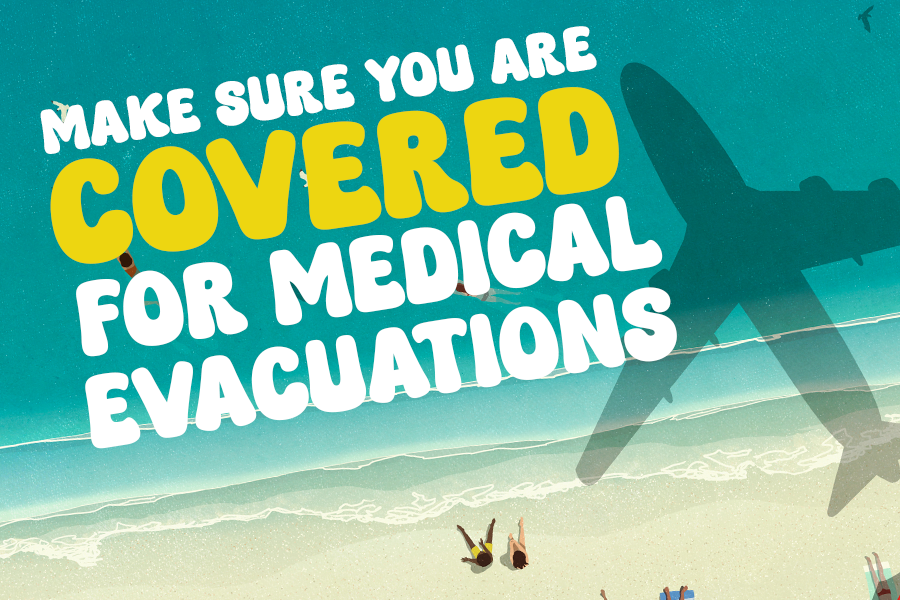
Check that medical evacuation is included
You may assume you will not need to be brought home for medical reasons whilst on holiday. But, if you become ill or injured while travelling, you may need to be transported to hospital, or back to the UK, for treatment. Medical evacuations can cost thousands of pounds.
Check your policy covers medical evacuation before travelling. This is especially important if your trip includes adventure activities like climbing, quad-biking or water sports.
Share your policy details with friends and family
Before you go on holiday, share your insurance policy details with travel companions, and friends or family at home. This can be helpful in case they need to contact your insurance company on your behalf, if you get into trouble abroad.

Pack your policy documents
When you travel, take a paper copy of your insurance policy with you. If you lose your phone abroad, this paper copy will provide the information you need, including your policy number and insurer’s emergency 24-hour telephone number.